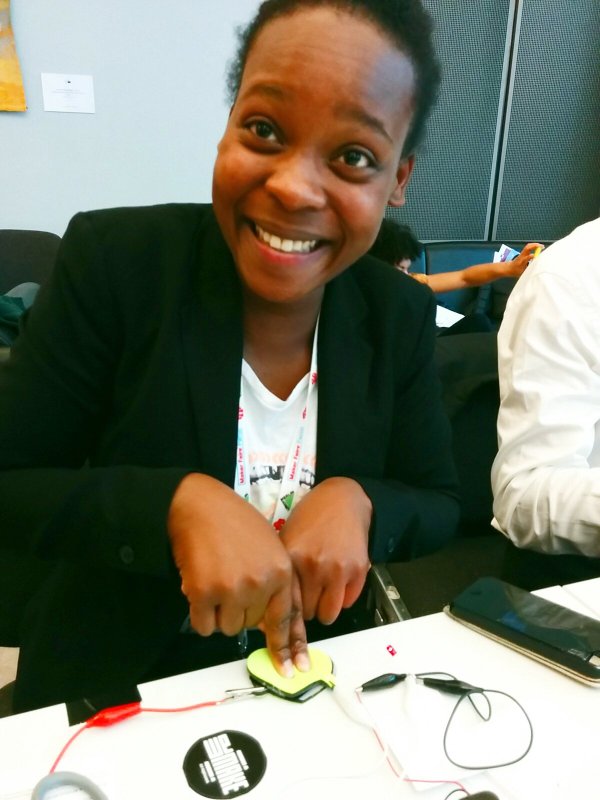
Textile sensor workshop at the Eu Parliament
On May 31, the EU institutions hosted the first-ever EU Institutional Maker Faire in the European Parliament building. I was
On May 31, the EU institutions hosted the first-ever EU Institutional Maker Faire in the European Parliament building. I was
(originally created and posted on CheFuturo) “Oggi sono qui per parlarvi di un tema che mi sta molto a cuore. Porto con me un dispositivo medico, un pacemaker che genera ogni singolo battito del mio cuore. E come posso fidarmi del mio stesso cuore quando è controllato da una macchina che gira su codice proprietario e senza alcuna trasparenza?” Così ha iniziato il suo intervento Marie, al 32esimo Chaos Communication Congress che da più di 30 anni, nella settimana tra Natale e Capodanno, ospita una serie di interventi sul tema della sicurezza, crittografia e libertà di parola in rete e accoglie circa 13 mila persone per 3 intensi giorni fatti di scambio di conoscenze, esperimenti, sessioni di studio, hacking di qualsiasi cosa. LA STORIA DI MARIE E DEL SUO CUORE DIGITALE La storia di Marie inizia 4 anni fa quando il suo cuore ha iniziato a battere troppo lentamente ed in emergenza le è stato impiantato un pacemaker, come accade a
L’ITS Tessile Abbigliamento Moda di Biella é un Istituto Tecnico di nuova generazione che propone percorsi biennali post diploma alternativi
“The Culture Dress” series is a collaboration between media artist Afroditi Psarra and architect Dafni Papadopoulou that aims to combine electronic handicrafts with parametric design and digital fabrication on an ongoing research on wearables. The project was developed during the Maker-In-Residence program at WeMake, Milan´s Makerspace that I’m curating. Dafni and Afroditi spent with us two weeks in our guest-room at the second floor of the makerspace. I’ve been following the work of Afroditi for a couple of years and it was great to have her with us, meet with Dafni and make our community know about their practise. Explore more pics and other documentation: wemake.cc/mir/
I was invited to be part of the Jury to evaluate the submissions for the Wearable Technology Competition together with Ronen Kadushin, Alessio Erioli, Anastasia Pistofidou, Elizabeth E. Fraguada, Niccolò Casas, Martìn Rodriguez Montoya. Read the brief and get ready to participate (submissions deadline 31st May 2015) Reshape focuses on the definition of this language, proposing a new challenge to makers and designers: RESHAPE15 | wearable technology competition. Proposals will focus on the possibilities of wearable technology without any design limitation. Once again Reshape leaves to designers freedom and responsibility of their own choices. Nonetheless, all submissions must reflect the mission of Reshape: merging ideas with fabrication processes and market viabilities. Fabrication strategies must be clear and reasonable, demonstrating a real control of the production process. The distributed network of fabrication of Reshape includes Fab Labs and Maker Space, all equipped with digital fabrication machines such as laser cutters, 3d printers, milling machines and robotic arms. Entries are required to rely on those machines as
read more Participate to Reshape15 – Wearable Technology Competition
 ZOESCOPE